
When a child walks into a karate class for the first time, the attention usually goes straight to the uniform, punches, kicks, and coloured belts. But after a few weeks, parents often notice something more interesting. Their child starts standing a little straighter, listening more carefully, and handling small challenges with greater confidence.
That is the real value of kids’ karate classes. The lessons may begin with karate, but the skills developed inside the training hall can become useful far beyond it. From discipline to emotional control, children learn habits that can influence how they behave at school, at home, and around others.
Where a Simple Karate Routine Starts Building Discipline
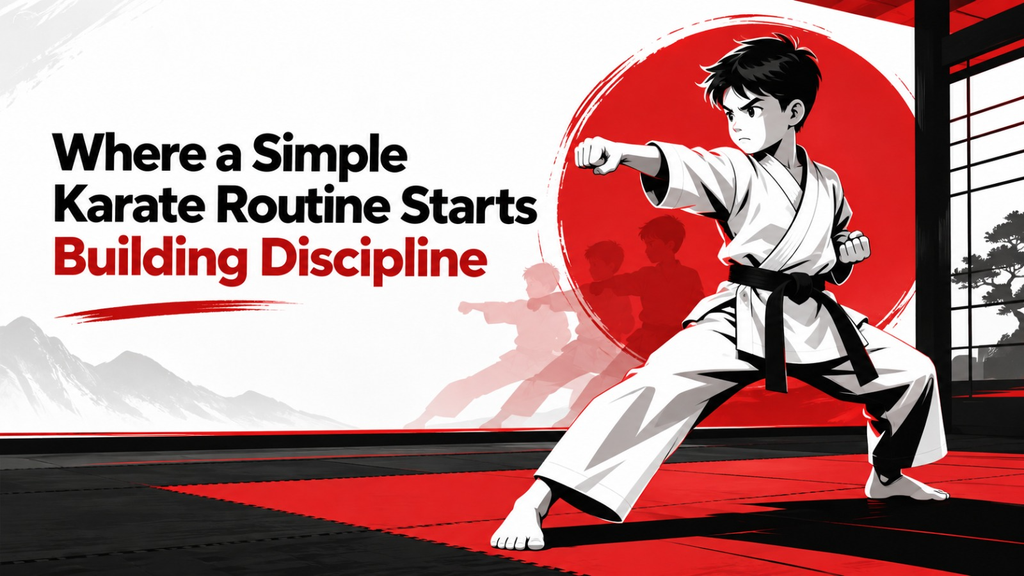
Children thrive on routines, and karate naturally provides one. Reaching class on time, wearing the uniform correctly, warming up, practising techniques, and listening to instructions create a predictable structure.
Instead of expecting children to become disciplined overnight, karate coaching allows them to practice it repeatedly.
Over time, children begin understanding that progress comes from consistency. Missing a step or getting a technique wrong is not the end of the lesson. They try again, make adjustments, and continue.
That mindset can be useful when dealing with homework, sports, school projects, or any skill that requires patience.
The Quiet Confidence Behind Every New Technique
Confidence does not always mean being the loudest person in the room. Sometimes, it is simply being willing to try.
A child who initially struggles with a particular stance may eventually perform it correctly after repeated practice. That small achievement can create a sense of “I can do this.”
As children progress through Kids Karate Classes, they encounter achievable challenges rather than being expected to master everything immediately. Each improvement becomes a reminder that effort can lead to results.
This can help children approach new situations with less hesitation and more self-belief.
Learning to Stay Calm When Things Get Difficult
Karate training is physical, but it also requires concentration. Children have to remember movements, maintain balance, follow instructions, and respond appropriately.
These activities encourage children to manage frustration instead of immediately giving up.
During karate exercises, a child may struggle with coordination or forget a sequence. Rather than treating the mistake as failure, training teaches them to pause, listen, correct the movement, and try again.
That ability to remain composed can become valuable outside the training hall too.
From Knowing Karate to Understanding Self-Protection
One important lesson children can gain from martial arts is that physical strength should come with responsibility. Karate is not about encouraging children to fight. It is about helping them understand awareness, boundaries, confidence, and appropriate responses.
A good self-defense academy can introduce children to practical principles of personal safety in an age-appropriate way. They can learn to recognize uncomfortable situations, maintain awareness of their surroundings, and seek help when needed.
Self-protection classes can therefore become less about confrontation and more about making sensible decisions when facing unfamiliar or uncomfortable circumstances.
Respect Is Practiced, Not Just Explained
In a karate environment, children learn that respect is shown through actions. Greeting instructors, listening when someone speaks, following class rules, and treating training partners properly are all part of the experience.
This creates opportunities for children to understand that confidence and respect can exist together.
Whether they are training with someone older, younger, stronger, or less experienced, children learn that every training partner deserves consideration.
Learning How Effort Turns Into Progress
There is something satisfying about watching a child move from struggling with a basic technique to performing it smoothly.
Karate makes progress visible.
A child may begin by learning a simple stance. Later come combinations, controlled movements, fitness drills, and more advanced techniques. The journey shows that improvement is rarely instant.
Parents who encourage their children to learn karate can therefore give them more than a physical activity. They can introduce them to a process where patience, practice, and persistence have a visible outcome.
What Noida Parents Can Look for in a Karate Program
For parents exploring kids karate classes in Noida, the quality of the training environment matters as much as the techniques being taught.
Look for a program where:
- Children are taught according to their age and ability.
- Safety and controlled practice are prioritized.
- Instructors encourage discipline without unnecessary pressure.
- Children learn respect alongside physical skills.
- Progress is encouraged rather than compared constantly.
The right environment should make children feel challenged, supported, and comfortable enough to keep learning.
The Skills That Stay After the Class Ends
When a karate session finishes, the lessons do not necessarily end at the training hall. A child who learns to listen carefully, stay patient, respect others, manage frustration, and keep trying after mistakes has gained skills that can be useful for years.
That is why kids’ karate classes can offer much more than punches and kicks. With the right karate coaching, children can develop discipline, confidence, awareness, coordination, and a stronger sense of responsibility.
For parents in Noida, choosing a well-structured karate program can be a meaningful way to introduce children to fitness while helping them develop habits that support everyday life.
Ready to help your child build confidence, discipline, and practical skills? Explore Karate India Federation’s karate training programs and take the first step toward a stronger, more confident future.