
Walk into any dojo and the first thing you notice is the belts. Karate belt colors aren’t just for looks. They tell you exactly where a student stands, how much they’ve trained, and what they’ve mastered so far. A white belt and a black belt might be standing right next to each other, but years of sweat, practice, and discipline separate the two. Here’s what every student, or parent of a student, should actually know about how this system works.
What Actually Changes as a Karate Student Levels Up?
It’s easy to think Karate belt colors tests are only about learning new moves. In reality, a lot more shifts underneath the surface.
- Technique Depth – Punches, kicks, and stances that once felt clunky start becoming second nature.
- Body Strength – Months of drills quietly build stamina and flexibility a student didn’t have before.
- Mental Focus – Karate teaches patience. Students learn to stay calm even when a move isn’t working.
- Sparring Skill – Reactions get sharper. What used to be a slow block becomes an instant response.
- Confidence Level – This is the one parents notice first. Kids stand taller, speak up more, and carry themselves differently.
None of this happens by accident. It’s the result of consistent karate coaching and showing up week after week, even on days motivation is low.
How Karate Belt Colors Reflect a Student’s Changing Skills and Mindset

The karate belt order isn’t random. Each color marks a real shift in what a student can do and how they think about training.
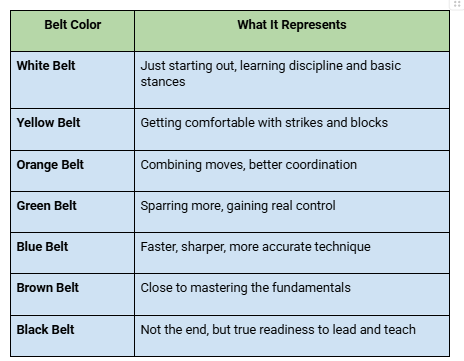
A quick way to picture the mental journey:
White → “I’m learning the basics”
↓
Yellow/Orange → “I’m building coordination”
↓
Green/Blue → “I can hold my own in sparring”
↓
Brown → “I’m refining what I know”
↓
Black → “I’m ready to guide others”
Belt Progression Is Not a Race: Understanding the Time Between Ranks
This is where a lot of students, and honestly a lot of parents too, get impatient. But rushing through belts usually backfires.
- Practice Consistency – Showing up regularly beats trying to cram before a grading.
- Skill Mastery – A good instructor won’t pass a student who’s just memorized moves without truly understanding them.
- Age Factor – Younger kids often need more time simply because their bodies and focus are still developing.
- Grading Cycles – Belt tests usually happen every few months, not every week, and that gap matters.
- Individual Growth – Two students who joined the same day might reach black belt at very different times, and that’s completely fine.
If you’re looking into a karate belt ranking system in Noida, ask how gradings are structured. An academy that takes its time with promotions is usually the one producing genuinely skilled students.
Frequently Asked Questions
Q1. How many belt colors are there in karate?
Karate belt colors have Most styles used somewhere between 8 and 10 belt levels, running from white all the way to black.
Q2. How long does it actually take to reach black belt?
Roughly 3 to 5 years for most students, though it really depends on how often someone trains and how quickly they pick things up.
Q3. Is 6 to 7 years old too early to start karate?
Not at all. This is actually a great age to begin. Karate classes for beginners are designed to build discipline, focus, and coordination in young kids, and most children pick things up quickly at this stage.
Q4. What should I actually check before choosing a dojo?
Look for certified instructors and a clear grading structure. Whether you’re comparing options or searching a karate academy near me online, ask to sit in on a class before signing up.
How to Track Progress When the Belt Color Does Not Change
Belts don’t change every month, and that can feel discouraging. But growth is still happening even when the color on your waist stays the same.
- Self Assessment – Pay attention to small things, like a kick that finally lands cleaner or a stance that holds steadier.
- Instructor Feedback – A good coach will point out exactly what’s improving, even between gradings.
- Skill Journal – Jotting down new techniques after each class helps students see progress they’d otherwise miss.
- Small Wins – Better breathing during sparring, less hesitation, more control. These count just as much as a new belt.
So if you’re typing karate classes near me into a search bar right now, don’t just judge a place by how fast it promotes students. Judge it by how much real skill it builds along the way.
Karate India Federation brings together experienced coaches, a fair and transparent belt system for Karate belt colors, and training designed for every age group and skill level. Whether your child is stepping onto the mat for the first time or you’re an adult chasing that black belt, Karate India Federation is built to guide you through every single stage of the journey.