
A student walks into karate class knowing what comes next. Warm-up, stance practice, punches, kicks, and a few familiar karate exercises—everything feels predictable. Then the instructor pairs everyone up and says one word: “Kumite.”
The same student who was confidently practicing techniques now becomes more alert. Their partner is moving, the distance keeps changing, and there is no fixed target waiting for the next punch. This is where Kumite in Karate becomes very different from regular training.
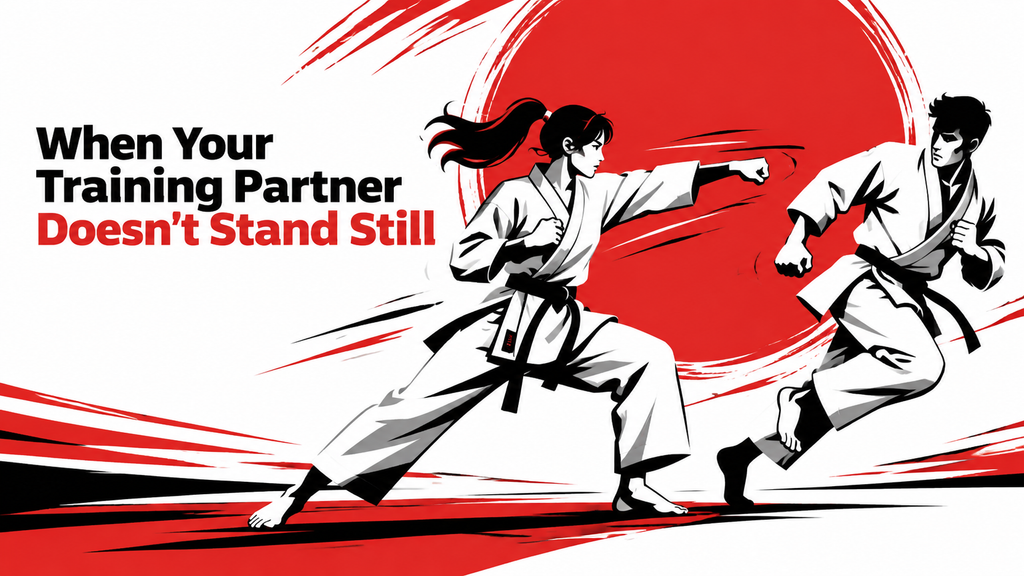
When Your Training Partner Doesn’t Stand Still
Regular karate practice is where students build their foundation. They repeat blocks, kicks, footwork, and Karate punches until their movements become smoother and more controlled.
Kumite changes the experience because another person is responding to those movements. A partner may step closer, move away, or change direction, forcing the student to adjust rather than simply repeat a memorized technique.
Instead of thinking, “What technique comes next?” the student starts thinking:
- Where is my opponent moving?
- Should I step forward or create distance?
- Is this the right moment to respond?
- Can I stay balanced while moving?
There is no fixed script. Students have to observe, react, and adjust according to what is happening in front of them.
It’s Not About Being the Strongest
Many people assume sparring is mainly about strength or speed. Kumite teaches something different. Timing, distance, and control can be just as important.
A technique used at the wrong moment may achieve very little. A well-timed movement can be far more effective without depending on unnecessary force. Students gradually learn that staying composed can be more useful than rushing into every exchange.
This is also worth remembering when discussing martial arts vs. karate. Martial arts is a broad term covering different disciplines, while karate has its own techniques, principles and training methods. Kumite gives karate students a practical opportunity to bring these skills together.
The Hardest Part Happens in the Mind
During regular practice, students usually know which movement they are going to perform. Kumite removes some of that certainty.
Picture a student standing opposite a training partner. The partner suddenly moves forward. There is only a brief moment to decide whether to move, defend or respond. Freezing is not an option, but rushing can also create mistakes.
With regular practice, situations like these can help develop:
- Faster reactions
- Better concentration
- Greater self-control
- Confidence under pressure
Students also become more aware of their own habits. They may notice that they drop their guard when tired, move too quickly, or hesitate before responding. Kumite gives them an opportunity to recognize these gaps and work on them during future sessions.
Every Round Teaches Something New
One interesting part of Kumite is that no two rounds feel exactly the same. A student may perform well against one partner but struggle with another person’s speed or movement.
That experience can be useful. Instead of seeing mistakes as failures, students can use them as clues about what they need to practice. Maybe their footwork needs attention, their reaction is too slow, or they are giving away their next move too easily.
Over time, these small lessons can make regular training more meaningful. Students return to their karate exercises with a clearer idea of why certain movements matter.
Good Coaching Keeps Kumite Controlled
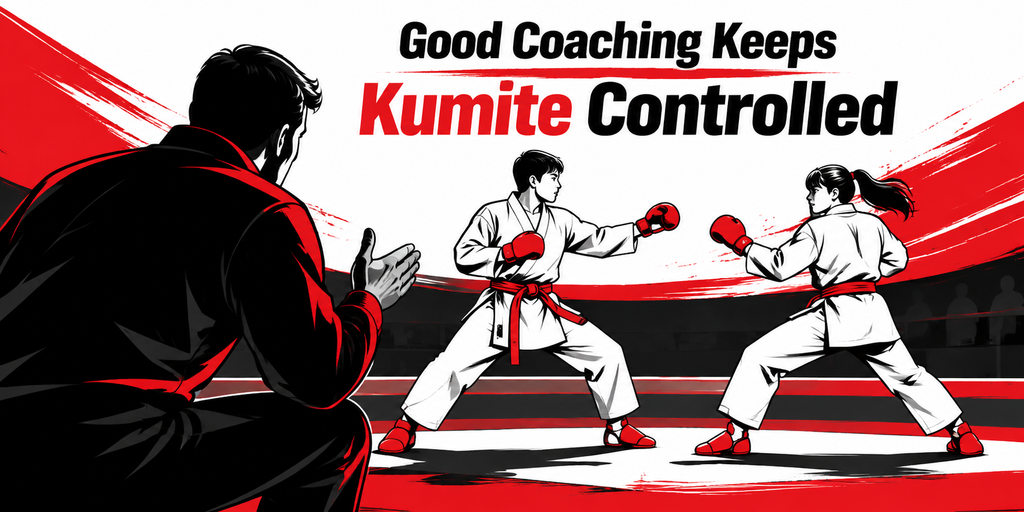
Kumite should never become a careless exchange of techniques. Students need to understand movement, distance, control, and safety before progressing to more demanding sparring drills.
This is where quality Karate Coaching makes a difference. A skilled instructor can introduce Kumite gradually, correct mistakes, and ensure students understand that control matters as much as technique.
For students training in Noida, the right learning environment can make the experience more comfortable and productive. A structured self-defense academy can also help students build awareness and confidence without encouraging unnecessary aggression.
Where Practice Meets Real-Time Thinking
Think back to that student at the beginning of class. During regular training, every movement had a clear order. Once Kumite started, their partner changed the situation every few seconds.
That is the real difference.
Regular training builds the tools. Kumite teaches students how to use those tools while another person is moving, reacting, and responding. It brings together footwork, technique, awareness, timing, and discipline in one experience.
With consistent practice and proper guidance, Kumite in Karate can become more than sparring; it can help students become calmer, sharper, and more confident in how they respond to challenges.
Ready to take your karate training further? Explore structured karate coaching with the Karate India Federation and discover the value of learning kumite with the right guidance.