
Getting children to exercise can be a daily struggle. They may happily run around when playing, but the moment you call it a “workout,” the excitement often disappears. That is where karate can change things. A karate workout does not feel like a boring exercise routine to a child. There is movement, practice, challenge, and something new to learn in almost every class.
From basic stances and kicks to Karate punches and simple combinations, children stay on their feet while learning skills that take patience and practice.
Make Movement Something They Look Forward To
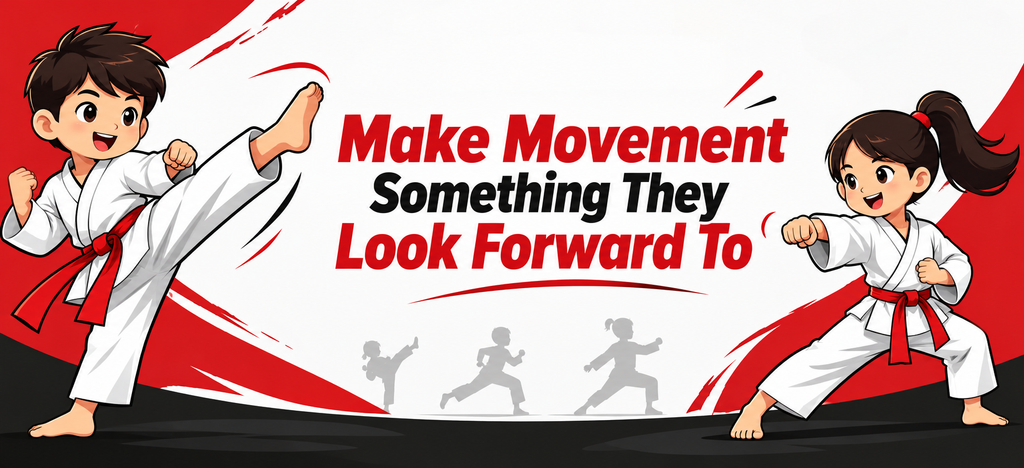
A karate session can be surprisingly active. Children are constantly moving from one drill to another, which keeps the class lively and prevents them from getting bored.
A beginner’s session may include:
- Warm-up drills: Jogging, jumping, and simple stretches prepare the body.
- Stance practice: Basic stances help children work on balance and body position.
- Karate Punches: Simple punching drills improve coordination, timing and control.
- Kicking practice: Basic kicks get the legs moving and encourage flexibility.
- Kata: Short sequences combine different movements and give children something to remember and practise.
The exercises may look simple at first, but children slowly become more comfortable with them. That feeling of finally getting a movement right can be incredibly motivating.
Why Not Turn Training Into a Game?
Children love a challenge. Trainers can use that natural enthusiasm to make Kids Karate Classes more enjoyable.
For example, a trainer could place soft targets around the training area and let children practise reaching them with controlled punches or kicks. Another activity could involve standing on one foot or holding a stance for a few seconds longer.
Even a simple “follow the leader” activity can keep younger students interested. One child performs a movement while the others copy it.
These little games do not take away from serious training. Instead, they give children a fun way to practise coordination, balance, memory, and movement.
Martial Arts vs Karate: Know the Difference
When parents search for martial arts vs. karate, the terms can sometimes become confusing. Martial arts is a broad category that includes several different disciplines. Karate is one specific martial art with its own techniques, movements, and training methods.
For children, karate can bring together several forms of development:
- Physical activity and fitness
- Balance and coordination
- Concentration and memory
- Discipline and patience
- Respect for instructors and fellow students
So, karate is not simply about learning how to punch or kick. Children also learn how to listen, follow instructions, and control their movements.
Karate Punches Are About Technique
Watch a beginner throw a punch, and they may focus entirely on speed or strength. With proper instruction, they soon discover that a good punch involves much more.
Children learn about their stance, hand position, body movement, and timing. They also learn that control is important. During karate coaching, instructors can introduce techniques according to the child’s age and ability rather than rushing them into difficult movements.
That makes training safer and helps children build good habits from the beginning.
The Confidence That Comes With Practice
One of the nicest things about children’s karate is seeing small changes over time. A child who could not remember a short kata may suddenly perform the entire sequence without help. Another child who was too shy to participate may eventually step forward and demonstrate a technique. These moments may seem small, but they can mean a lot to a young learner.
With regular karate coaching, children can gradually improve their:
- Concentration and attention
- Physical coordination
- Confidence
- Patience
- Discipline
- Ability to work towards a goal
The progress does not happen overnight. That is actually part of the lesson. Children learn that getting better often means trying, making mistakes, and trying again.
Give Their Energy a Better Direction
A good karate workout should leave children feeling involved, not forced. When training includes movement, challenges, and encouragement, exercise can become something they genuinely enjoy.
For parents considering kids karate classes, the important thing is finding suitable coaching where children can learn at a comfortable pace. Whether they are completely new to karate or already curious about martial arts, they can start with the basics and build from there.
At the Karate India Federation, children can take part in structured karate training while developing fitness, discipline, confidence, and practical skills. If your child has plenty of energy to burn, why not give that energy a new direction and help them learn karate along the way?
Pingback: Types of Karate Punches: Basic to Advanced | KIF
Pingback: Adult Karate Classes for Beginners | Karate India Federation